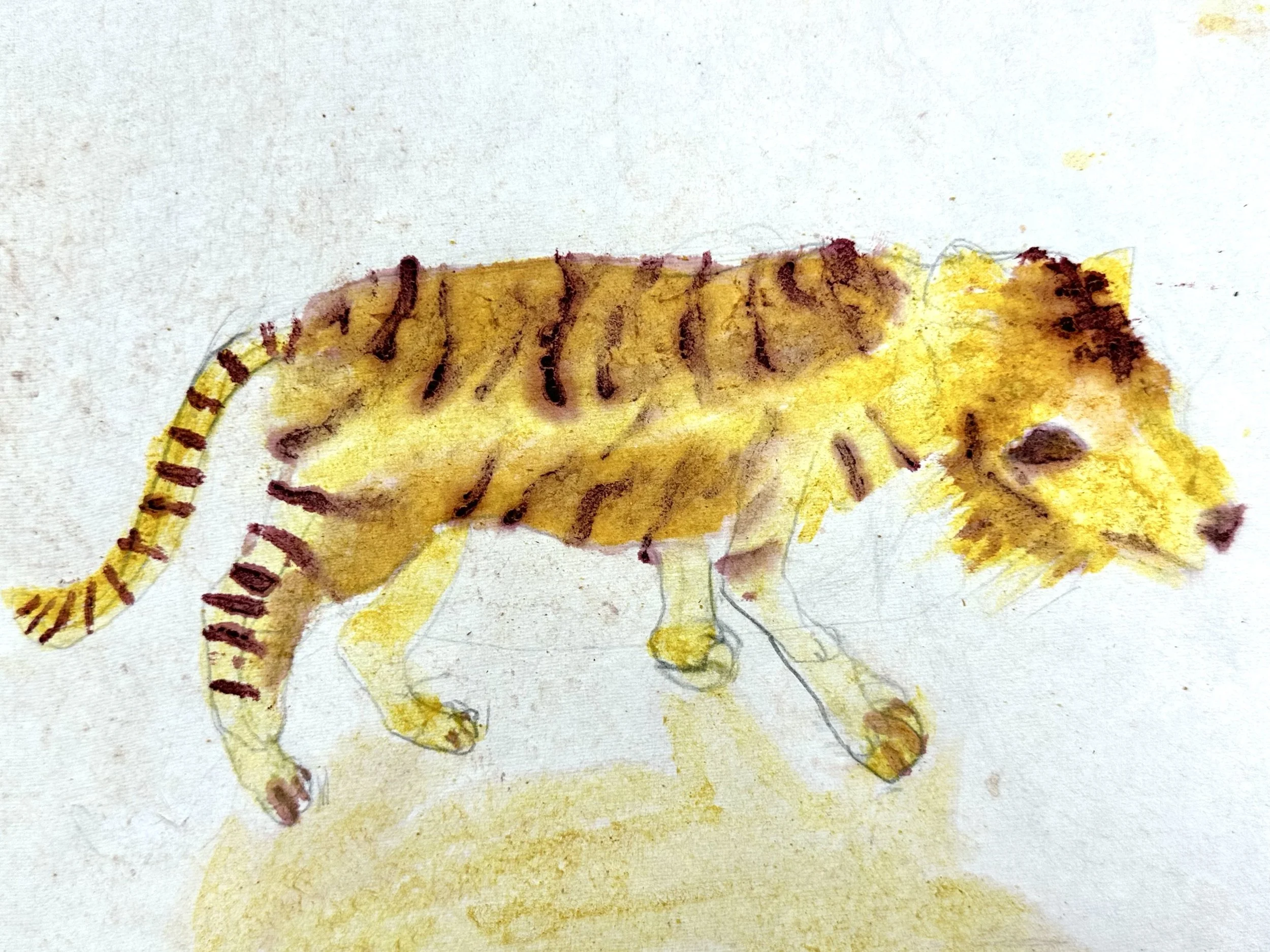
This week, our Little Ashcan students explored the fascinating history of natural dyes and pigments, learning how early civilizations such as the ancient Egyptians and Chinese developed and refined pigments for artistic use.
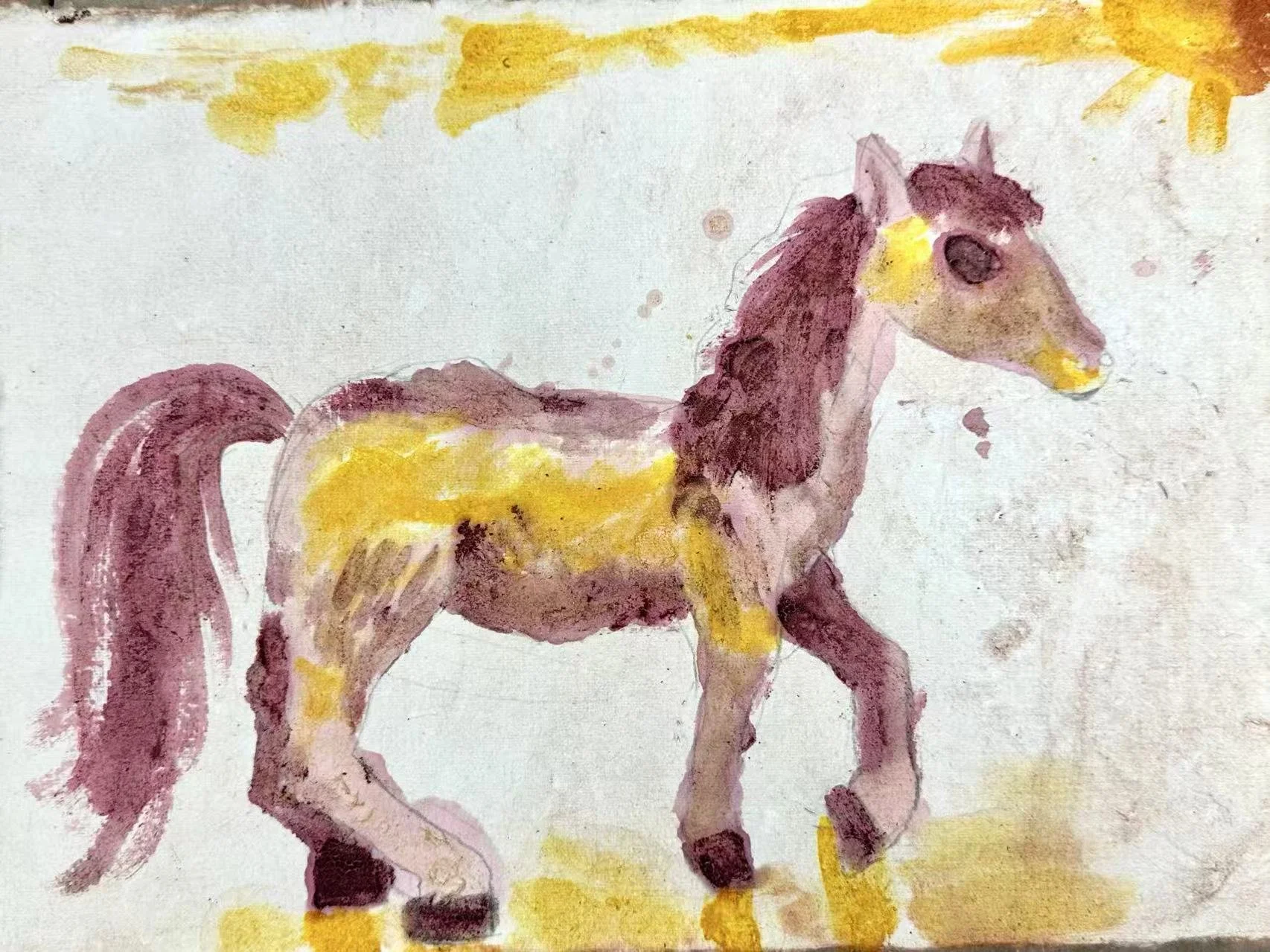
Students discussed how these materials were carefully processed to achieve stronger, longer-lasting colors, and how artists throughout history have experimented with unconventional materials to create unique visual effects.
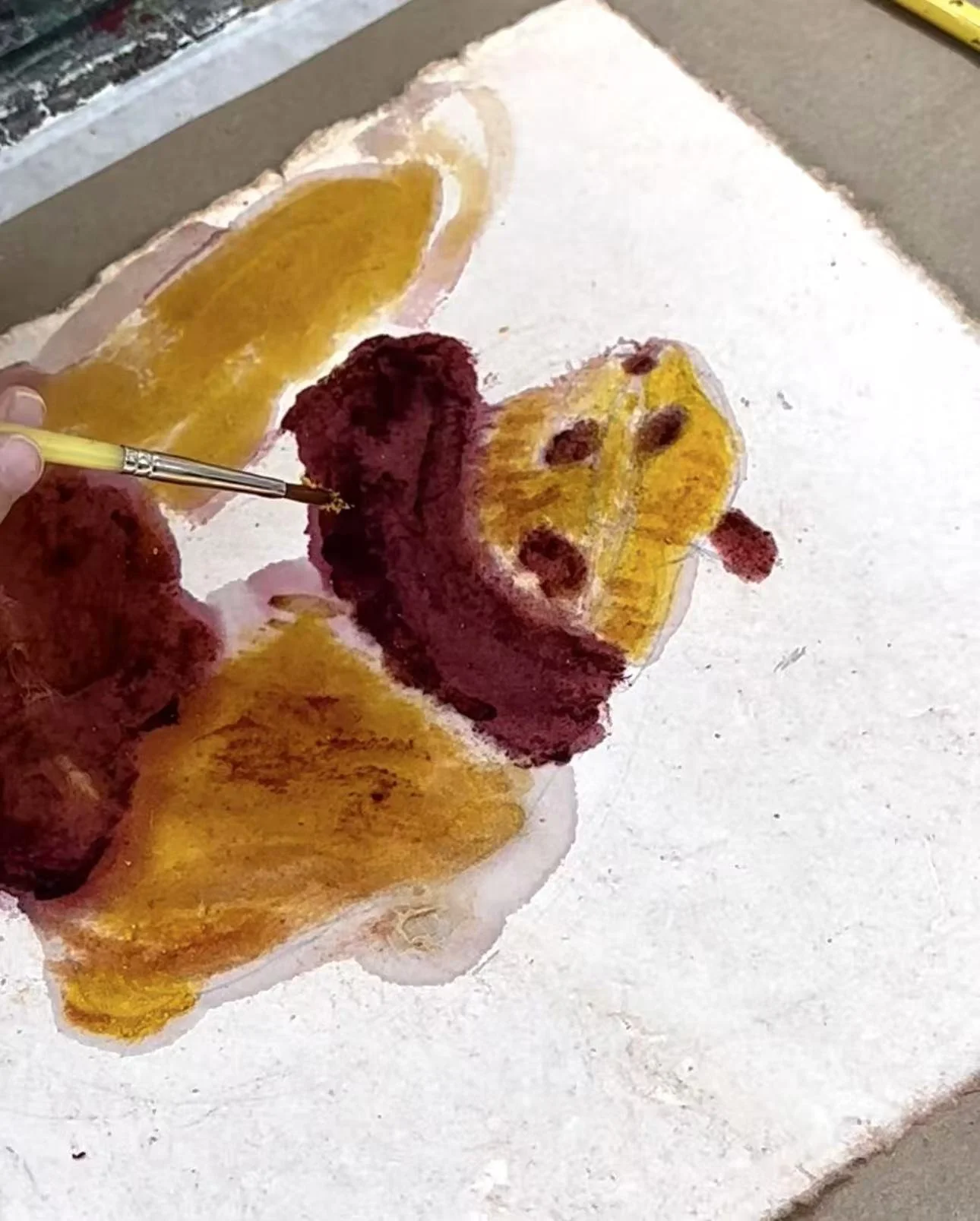
Inspired by this exploration, students were introduced to the idea of working with natural pigments in their own artwork. For this project, they created monochromatic paintings using beet juice as their primary medium. This approach encouraged them to focus on value, tone, and subtle variations within a single color, rather than relying on a wide color palette.
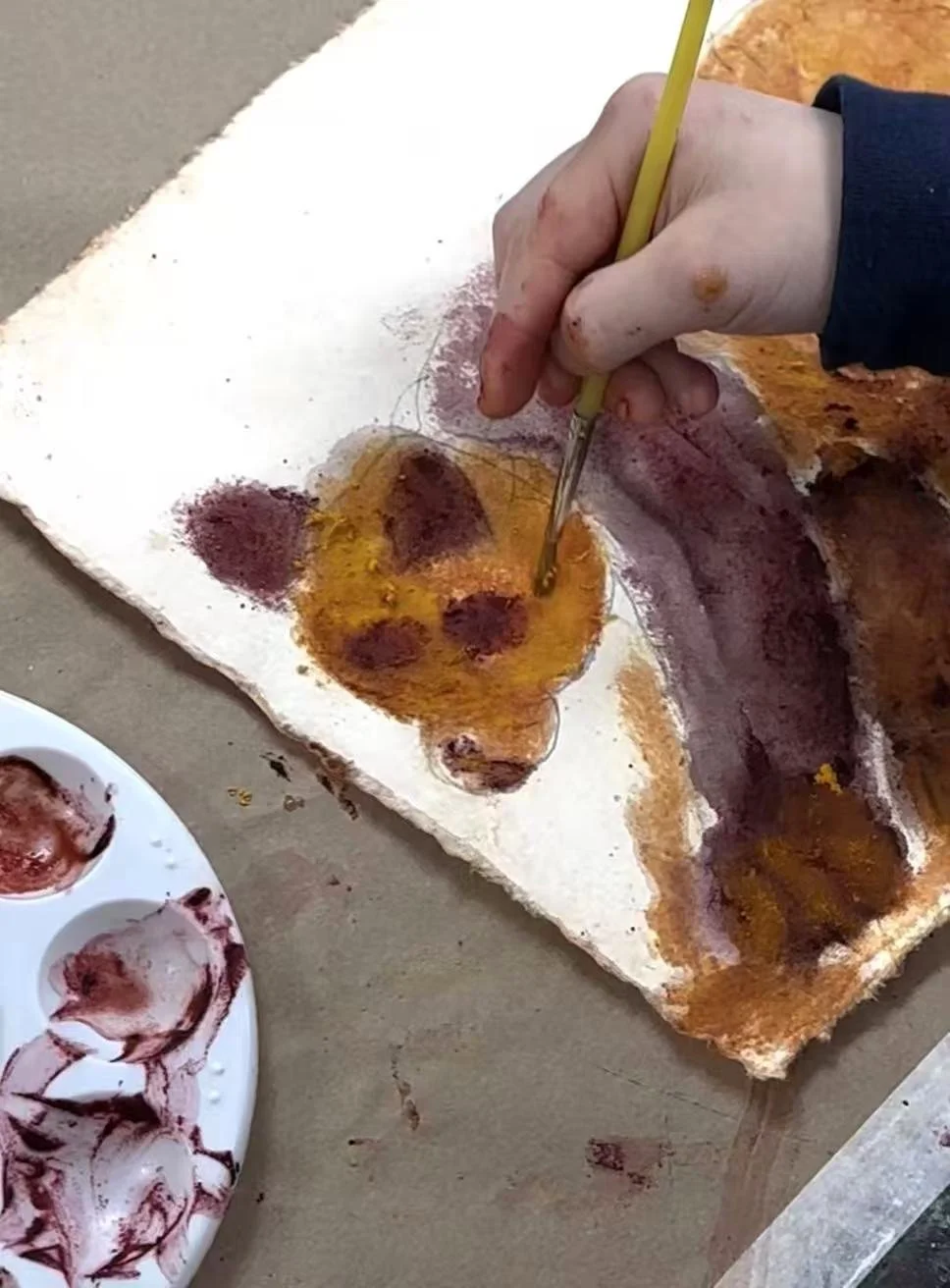
Students worked on watercolor paper, carefully observing their subject while paying close attention to form, volume, and fluidity. Through layering and brush control, they practiced creating depth and dimension, capturing the shape and surface qualities of their subject in a thoughtful and controlled way.
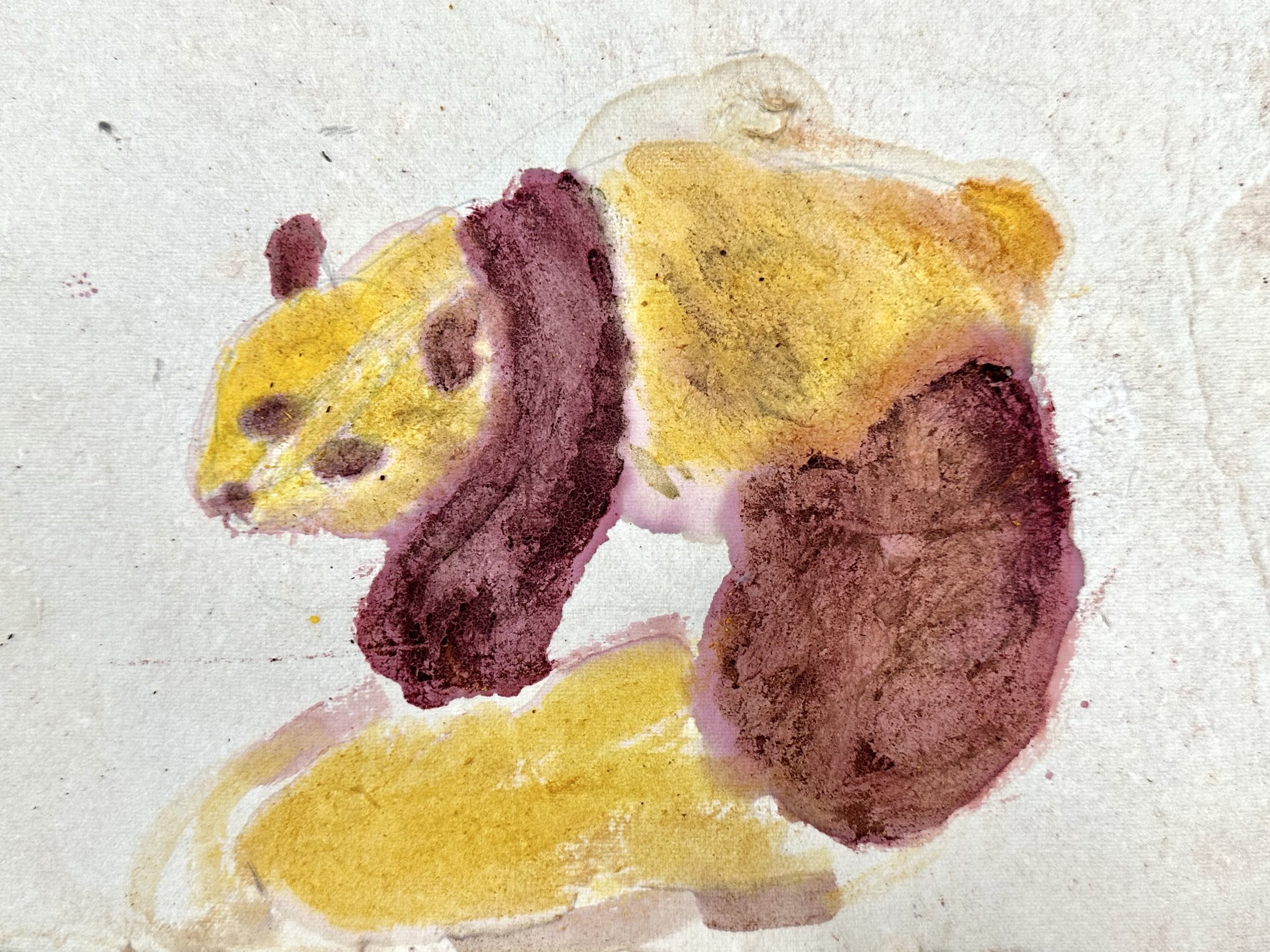
This project challenged students to think creatively and adapt to an unconventional material, while strengthening their foundational painting skills. The final works demonstrate strong focus, experimentation, and a growing understanding of how materials can influence artistic outcomes. Overall, it was a meaningful exploration of both art history and hands-on creative practice.